Case 01 · 2022 – 2025
Building & Scaling a Customer Journey Practice
From isolated customer feedback to a repeatable improvement system.
At a glance
- Context
- International B2B engineering services within a global engineering organization
- Timeframe
- 2022 – 2025
- Role
- UX Champion
- Service Design Facilitator
- Customer Journey Lead
- Scope
- Multiple regions · several related engineering services
The challenge
A technical design service was seen as an expert function — but customers increasingly expected an end-to-end service.
As expectations evolved, internal customer sites looked for end-to-end support, transparency, clear ownership and faster responses. Customer feedback, however, was inconsistent, service pain points were largely anecdotal, and improvement opportunities were hard to prioritize.
The first journeys showed that many problems sat outside the technical deliverable itself.
Communication
Many channels and email-heavy collaboration created latency.
Responsibilities
Roles, coordination and handover points were not always clear.
Process transparency
No up-to-date process definition customers could rely on.
Customer feedback
No standardized way to collect and act on feedback.
Service access
Not every customer problem was covered by the service offer.
Tools
Supporting tools needed better usability.
My role
I introduced and continuously evolved a Customer Journey Mapping approach to understand how customers experienced a technical engineering service. Starting from one local journey, it grew into a broader service improvement practice across sites, regions and service types — combining customer discovery, journey mapping, expectation management, pain-point analysis and structured action planning. Over time, the focus shifted from documenting experiences to creating improvement ownership and organizational learning.
Prepare
- Workshop structure and expectation setting
- UX introduction for participants
- 5-star service expectation exercises
Facilitate
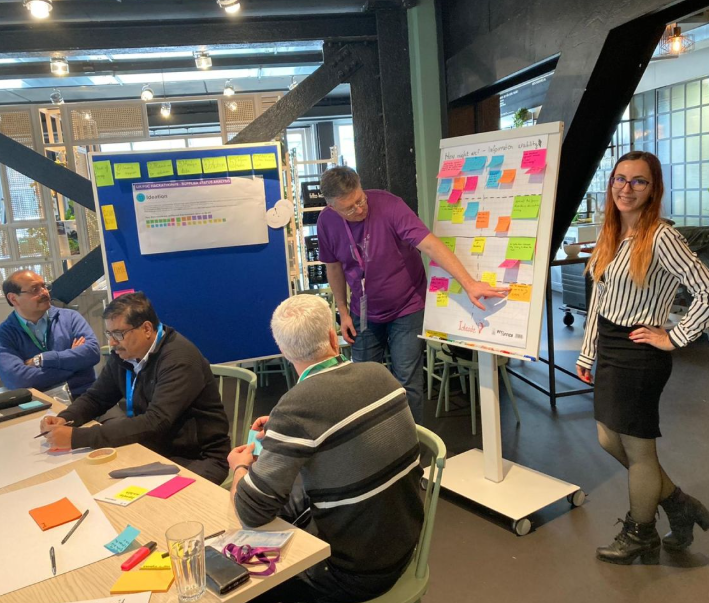
- Current and ideal journey mapping
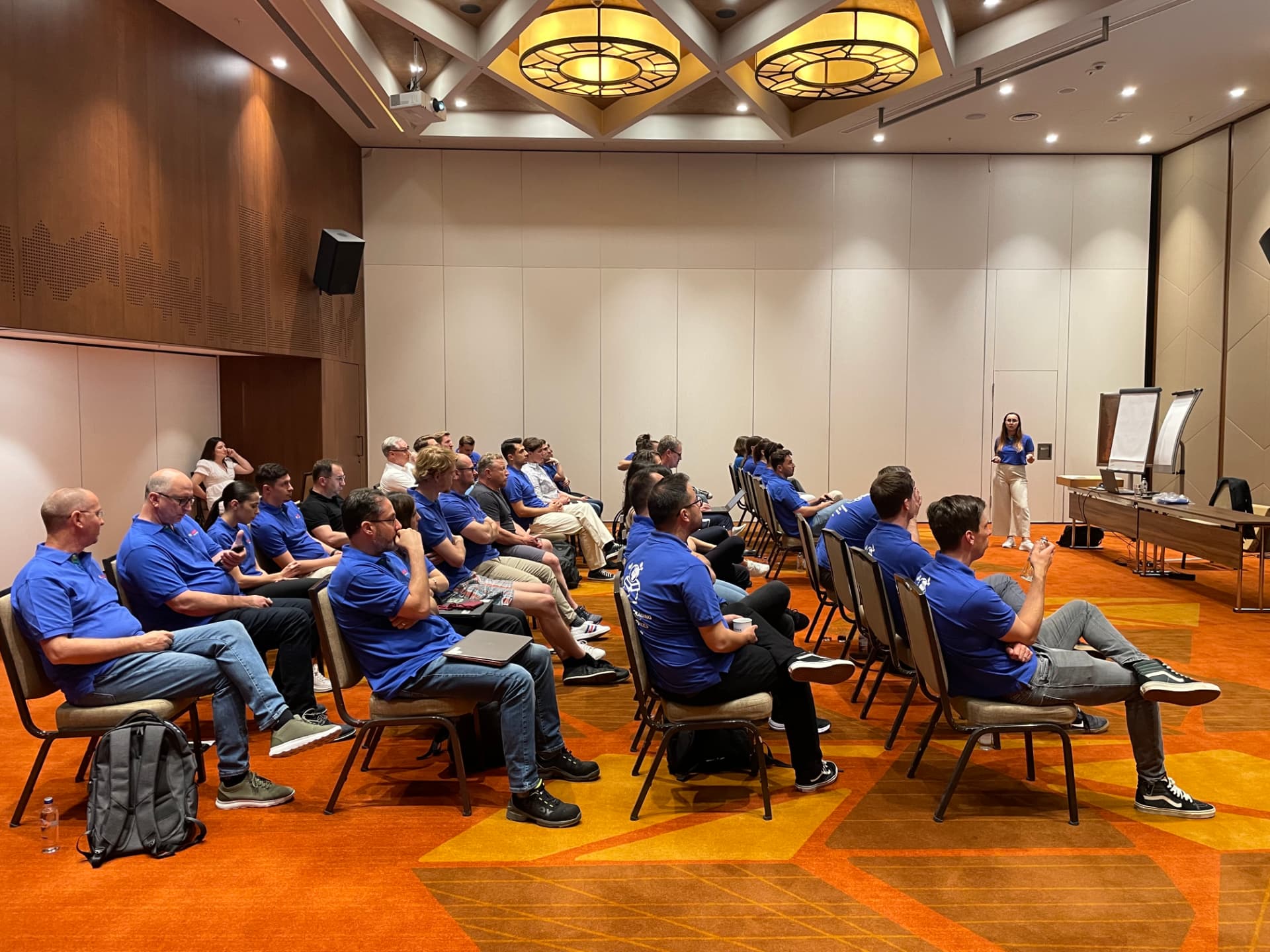
- On-site and virtual, cross-cultural sessions
- Multiple customer perspectives in parallel
Follow through
- Insight synthesis and pattern finding
- Improvement actions with owners and target dates
- Feeding learnings into the next journey
Provided expertise
- Customer Research
- Journey Mapping
- Workshop Facilitation
- Service Design
- Insight Synthesis
- Stakeholder Alignment
- Cross-Cultural Collaboration
- Improvement Prioritization
Glimpse of the process
Not eight separate workshops, but one approach that matured with every iteration.
- 01
First Customer Journey
Understanding the end-to-end service experience — from request to handover.
- 02
Closing the feedback loop
Pain points → improvement activities → a standardized customer feedback survey.
- 03
Customer discovery
Using UX before an active project to understand what potential customers expect.
- 04
Cross-regional scaling
Applying the method in a virtual workshop with three customer sites in another region.
- 05
Service-specific journeys
Moving from one generic journey to dedicated journeys for individual services.
- 06
Cross-service expansion
Applying the method to a different service — an operational handover service.
- 07
Different experience models
Seeing that one service creates different journeys depending on the collaboration model.
- 01Journey workshop
- 02Pain points clustered
- 03Improvements with owners
- 04Implementation
- 05Customer survey
- 06Next iteration
↺ Survey results feed the next workshop — the loop repeats.
Communication
Clear, proactive status and a known contact.
Expertise
Advice that goes beyond executing the request.
Speed
Short loops between draft and feedback.
Reliability
Quality and dates customers can plan with.
Partnership
Being involved early, not only at handover.
Key insights
What the journeys kept revealing
Across sites and services, recurring patterns appeared that a single workshop would not have shown.
Earlier involvement
Customers valued expert involvement earlier — before key decisions were already made.
Clear ownership & handover
Where a service ends, and who coordinates what, needed to be explicit.
Simpler customer input
Complex requirement inputs created iterations; simpler checklists helped.
Knowledge retention
Lessons learned and experience sharing needed a structured place.
The transition is the critical moment
In handover services, the hardest part was getting from request to stable operation — not daily operation itself.
UX before the project
Discovery with potential customers built understanding and relationships before any engagement started.
Key decisions
“One generic journey was no longer enough.”
As the service portfolio became more specialized, one broad journey tried to represent too many services, roles and interactions at once. It became hard to tell which pain point belonged to which service. The approach therefore had to specialize too — towards dedicated journeys per service and, later, per collaboration model.
Earlier
One generic journey
- Broad overview
- Many services combined
- Pain points hard to attribute
Later
Dedicated service journeys
- Clearer touchpoints
- Service-specific pain points
- Clearer ownership, targeted actions
“A workshop is not finished when the map is.”
Every session ended with concrete improvement actions, each with an owner and target date — turning the journey into an improvement loop instead of a document.
Constraints & trade-offs
Working with real customers inside a live service meant balancing ambition with practicality.
Limited workshop time
Expectation setting, mapping and action definition had to fit into one focused session.
Remote & cross-cultural
Virtual formats needed clear structure to keep participation high across regions.
Actions owned by others
Many improvements depended on teams beyond the facilitator — ownership had to be agreed, not assumed.
Outcome
Documented qualitative outcomes — no satisfaction scores or financial figures are claimed.
What changed
- — Customer feedback became part of the service: a standardized feedback approach created a closed loop between customer insight, implemented actions and future service development
- — Service improvement became structured: workshops consistently ended in improvement backlogs with named owners and deadlines — not just journey maps
- — UX scaled internationally: the approach expanded to another region and across multiple sites and stakeholder groups, keeping the same structured methodology
- — UX expanded beyond the original service: the method was later applied to several other operational, project and engineering services
What this case demonstrates
Customer Journey Mapping becomes far more valuable when treated as an operational improvement tool rather than a standalone UX activity. The biggest impact came not from the maps themselves, but from creating ownership, accountability and a repeatable improvement process.